SurveyMonkey alternatives for online community engagement: five platforms compared
What planning, architecture and engineering firms use when a public engagement project needs more than a survey link.

Pascal Fuhr, CEO of Senf
The short answer
For a planning, architecture or engineering consultancy running public engagement on client projects, the SurveyMonkey alternative that fits best is Senf: map questions, a project website, AI analysis of open-text comments and client-ready charts, priced per project with unlimited users. PublicInput suits US agencies that also run public meetings and resident outreach. Go Vocal and Social Pinpoint (now Social Point) are built for cities that run one standing engagement portal. Maptionnaire suits GIS-heavy map surveys. Senf and Go Vocal both document a scan import for paper forms from open houses, so in-person and online input end up in one dataset. SurveyMonkey stays the right tool for surveys that never ask where.
| Tool | Best for | Why |
|---|---|---|
| Senf | Best for: Planning, architecture and engineering consultancies running engagement on client projects | Map questions, project website, AI analysis and client charts in one project; unlimited users; from $2,500 per project |
| SurveyMonkey | Best for: Surveys with no location in them: client satisfaction, staff, market research | Fast to build, familiar to most staff, free Basic plan; no geographic map question |
| Social Pinpointnow Social Point | Best for: Agencies running one standing engagement site for all their projects | Project pages, map comments and surveys on one site, with Consultation Manager for stakeholder records |
| Go Vocalformerly CitizenLab | Best for: Cities running one permanent engagement platform for every department | Surveys, proposals, participatory budgeting and citizens' assemblies on one platform in 27 languages |
| Maptionnaire | Best for: GIS-heavy map surveys where spatial data is the main deliverable | Points, lines and polygons on WMS, WFS, WMTS, GeoTIFF or Esri vector tile basemaps; Shapefile and GeoJSON overlays |
| PublicInput | Best for: US public agencies that also run public meetings, SMS outreach and a resident database | 30+ engagement formats with a resident CRM, two-way email and SMS; 300+ organizations in 37 states |
Senf is our product. This comparison uses each vendor's public pricing pages and documentation, checked on October 18, 2026, and every source is linked at the end. Where a vendor doesn't publish prices, we say so instead of estimating.
Why do planning teams look for a SurveyMonkey alternative?
SurveyMonkey does what it was built for well: quick questionnaires to customers, staff and members. Public engagement on a planning project asks the tool for things a general survey product leaves out, and they show up in the first week of the project.
No answer can be a place
SurveyMonkey has no geographic map question. Its Click Map, a paid feature, records one click on an image you upload and exports it as a percentage position on that image. SurveyMonkey's help center also says Click Map isn't accessible to people using a screen reader, which matters on a public process. A planner needs the point, the route or the area as geometry that opens in GIS.
The project needs a home
Residents look for the timeline, the events, the documents and the FAQs before they answer anything. SurveyMonkey publishes a survey link, so the project page gets built somewhere else, often a Wix site with a domain bought for that one project.
Open houses still run on paper
Most planning projects include an open house, a pop-up or a workshop, and some residents only ever answer on paper. SurveyMonkey can't import those forms. Its help center says paper responses go in through a Manual Data Entry collector, typed one at a time, with no bulk upload. PublicInput works the same way through its Data Entry Mode.
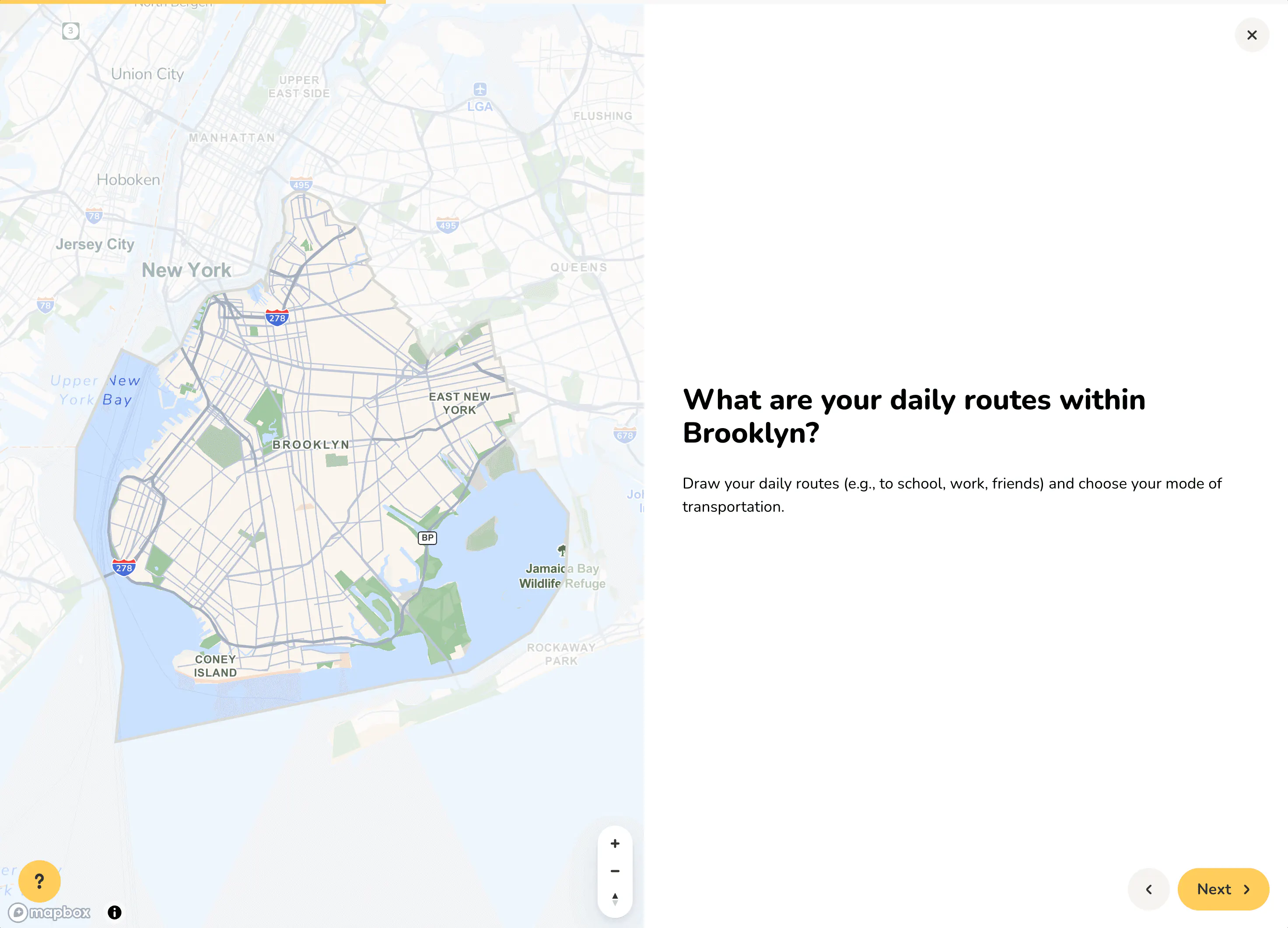
Senf and Go Vocal both document a scan import instead, so paper answers end up in the same dataset as the online ones. The Senf section below shows how it works, and Go Vocal offers scanning through FormSync on its Premium plan.
Comments arrive in more than one language
SurveyMonkey's Thematic Analysis groups open-text answers into themes on Advantage plans and up, for English surveys only. Multilingual surveys need a Premier plan, and you upload each translation as a CSV or PO file. Change the survey after that and the translation files need regenerating.
Seats and response caps
SurveyMonkey's team plans are priced per user and start at three users. The Advantage Annual plan includes 15,000 responses a year, and each response above the cap costs $0.15. On a firm with ten people touching engagement, access becomes a line item.
Length is the last one. Brian Reetz, Principal at Design Collective, on a 35-question park survey:
If we would have tried to do this survey with SurveyMonkey, 35 questions, I don’t know that we would have gotten this level of participation. I think people would have been bored ten questions in. With Senf the interactive mapping made this survey dynamic, interactive and memorable.
Brian Reetz
Principal at Design Collective
SurveyMonkey, Social Pinpoint, Go Vocal and Senf compared
Documented features as of October 18, 2026. Senf is in the last column, and it's our product; read that column accordingly. Maptionnaire and PublicInput are covered in their own section below the table.
| Decision area | SurveyMonkey | Social Pinpoint | Go Vocal | Senf |
|---|---|---|---|---|
| Built for | Surveys of every kind: customers, employees, research | Municipalities and agencies running a standing engagement site | Local governments running one central engagement platform | Planning, architecture and engineering consultancies running engagement on client projects |
| Map input from residents | No geographic map; Click Map records one click on an uploaded image | Pin comments on a Social Map; lines and areas are project-team layers | Pins, lines and areas in map surveys, one input per map question | Points, routes and areas on a basemap or your own site plan; syncs into ArcGIS Online |
| Project website | None; you share a survey link | Project microsites with sub-pages inside your organization's site | Platform homepage with project pages and a custom URL | Multi-page project website on its own address, including the client's domain |
| Paper forms from open houses | Typed in by hand through a Manual Data Entry collector, one response at a time | No paper-scan import documented | FormSync scans paper forms back in, on Premium and up | Printable survey (PDF or Word); scans import into the same dataset as online answers, marked as paper |
| Open-text analysis | AI themes for English surveys, on Advantage plans and up | Analysis Assistant for sentiment and key phrases; theme detection sold separately (Advanced Reporting & Analytics) | Sensemaking: up to 30 inputs on Standard, auto-insights on Premium | AI categories your team edits, sentiment, and columns filled from your own instruction |
| Languages | Multilingual surveys on Premier; you upload each translation file | Add-on translates site content into up to 15 languages; contributions stay untranslated | Interface in 27 languages; auto-translation for 3 languages on Premium, 10 on Enterprise | 17 languages with one-click translation; answers translated back for your team |
| Team access | One seat per person; team plans start at 3 users | Set quota of user licenses; roles assigned project by project | Standard: 4 admin and 5 project manager seats; Premium: 8 and 25 | Unlimited users on every paid license |
| Published pricing | Free Basic (10 questions per survey); Advantage $39/month, Premier $139/month, billed annually | Not published | Not published; plans list seats and features | Free to build and use in a proposal; from $2,500 per live project or $9,990 a year for unlimited projects |
Built for
- SurveyMonkey
- Surveys of every kind: customers, employees, research
- Social Pinpoint
- Municipalities and agencies running a standing engagement site
- Go Vocal
- Local governments running one central engagement platform
- Senf
- Planning, architecture and engineering consultancies running engagement on client projects
Map input from residents
- SurveyMonkey
- No geographic map; Click Map records one click on an uploaded image
- Social Pinpoint
- Pin comments on a Social Map; lines and areas are project-team layers
- Go Vocal
- Pins, lines and areas in map surveys, one input per map question
- Senf
- Points, routes and areas on a basemap or your own site plan; syncs into ArcGIS Online
Project website
- SurveyMonkey
- None; you share a survey link
- Social Pinpoint
- Project microsites with sub-pages inside your organization's site
- Go Vocal
- Platform homepage with project pages and a custom URL
- Senf
- Multi-page project website on its own address, including the client's domain
Paper forms from open houses
- SurveyMonkey
- Typed in by hand through a Manual Data Entry collector, one response at a time
- Social Pinpoint
- No paper-scan import documented
- Go Vocal
- FormSync scans paper forms back in, on Premium and up
- Senf
- Printable survey (PDF or Word); scans import into the same dataset as online answers, marked as paper
Open-text analysis
- SurveyMonkey
- AI themes for English surveys, on Advantage plans and up
- Social Pinpoint
- Analysis Assistant for sentiment and key phrases; theme detection sold separately (Advanced Reporting & Analytics)
- Go Vocal
- Sensemaking: up to 30 inputs on Standard, auto-insights on Premium
- Senf
- AI categories your team edits, sentiment, and columns filled from your own instruction
Languages
- SurveyMonkey
- Multilingual surveys on Premier; you upload each translation file
- Social Pinpoint
- Add-on translates site content into up to 15 languages; contributions stay untranslated
- Go Vocal
- Interface in 27 languages; auto-translation for 3 languages on Premium, 10 on Enterprise
- Senf
- 17 languages with one-click translation; answers translated back for your team
Team access
- SurveyMonkey
- One seat per person; team plans start at 3 users
- Social Pinpoint
- Set quota of user licenses; roles assigned project by project
- Go Vocal
- Standard: 4 admin and 5 project manager seats; Premium: 8 and 25
- Senf
- Unlimited users on every paid license
Published pricing
- SurveyMonkey
- Free Basic (10 questions per survey); Advantage $39/month, Premier $139/month, billed annually
- Social Pinpoint
- Not published
- Go Vocal
- Not published; plans list seats and features
- Senf
- Free to build and use in a proposal; from $2,500 per live project or $9,990 a year for unlimited projects
When is SurveyMonkey still the right tool?
Keep it for surveys that never ask where. A client satisfaction survey, a staff poll or a post-project feedback form runs well in SurveyMonkey, and most people on your team already know how to build one. The free Basic plan covers 10 questions per survey, paid plans add skip logic, data exports and more than 200 integrations, and Premier adds crosstabs and advanced logic for research work. None of the engagement platforms below try to replace that.
Senf: built for consultancies running engagement on client projects
Senf builds the engagement project from the RFP you're pursuing: a survey with map questions, a multi-page project website and the analysis view your team works in after the survey closes. You can start from the RFP, a Word document of the questionnaire, a prompt or a template, and the project is free to build and use in your proposal. On a general plan update with three open houses and a Spanish-language survey, that means one project instead of a survey tool, a Wix site and a spreadsheet.
Map questions on your own site plan
Residents add points, draw routes and outline areas on a basemap or on your own site plan, placed to scale where it will be built. Map answers sync into ArcGIS Online as they arrive and export as GeoJSON or Shapefile, so the GIS team gets geometry it can open straight away. The map-based engagement page shows each question type.
Residents can also place points and draw on the map with a keyboard, with spoken feedback on their position. Senf last tested this with participants with visual and mobility impairments on April 20, 2026; the guide to accessibility in community engagement covers what agencies now ask for.
The open house and the online survey in one dataset
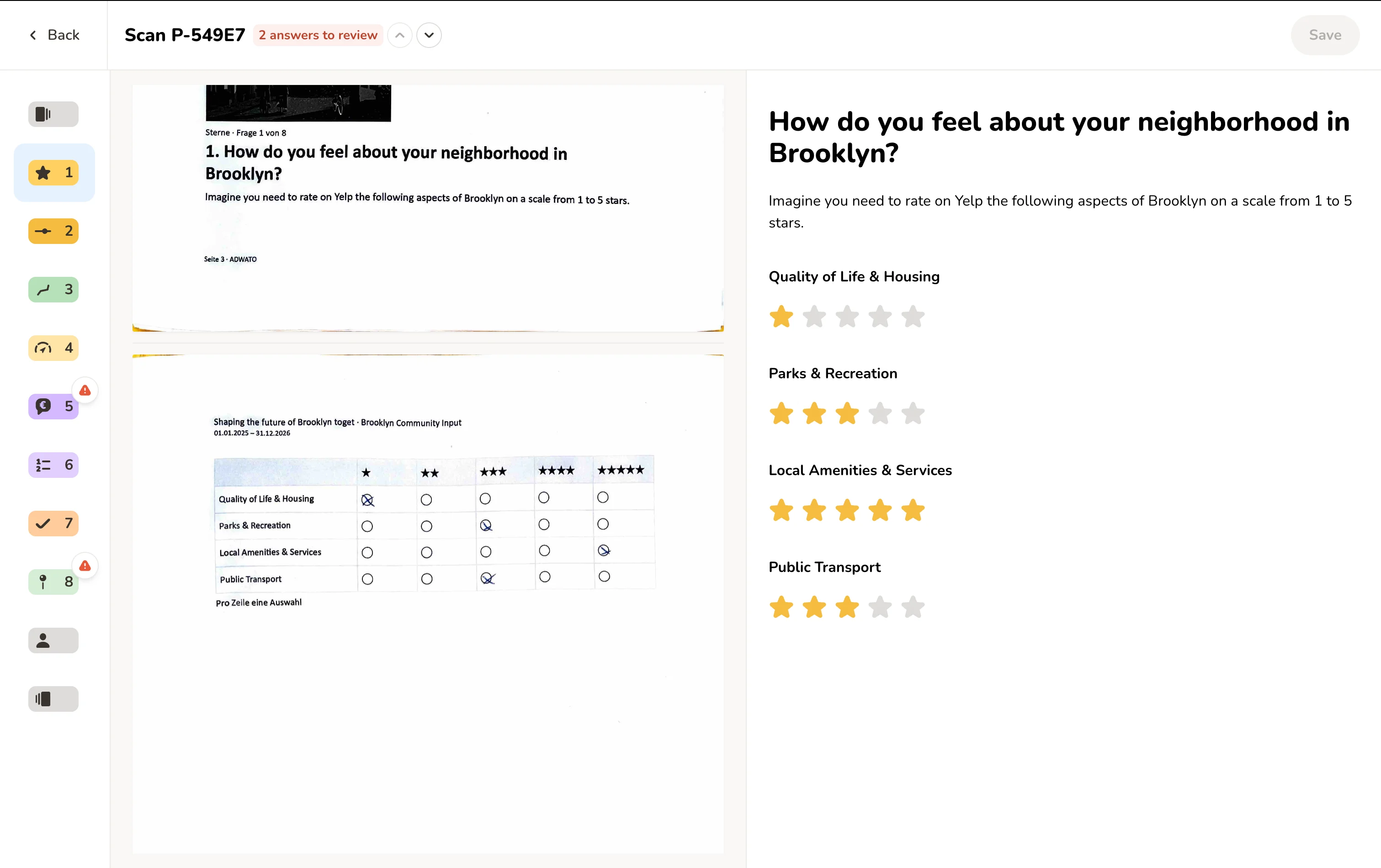
Export the survey as a PDF or Word file, print it for the open house, collect the forms and import the scans into the project. A person reviews each scan before it's saved, and the paper answers join the online ones in the same dataset, marked as paper. Map answers can't be read from a scan, so staff draw those in by hand. The paper survey guide shows the round trip.
Comment analysis your team controls
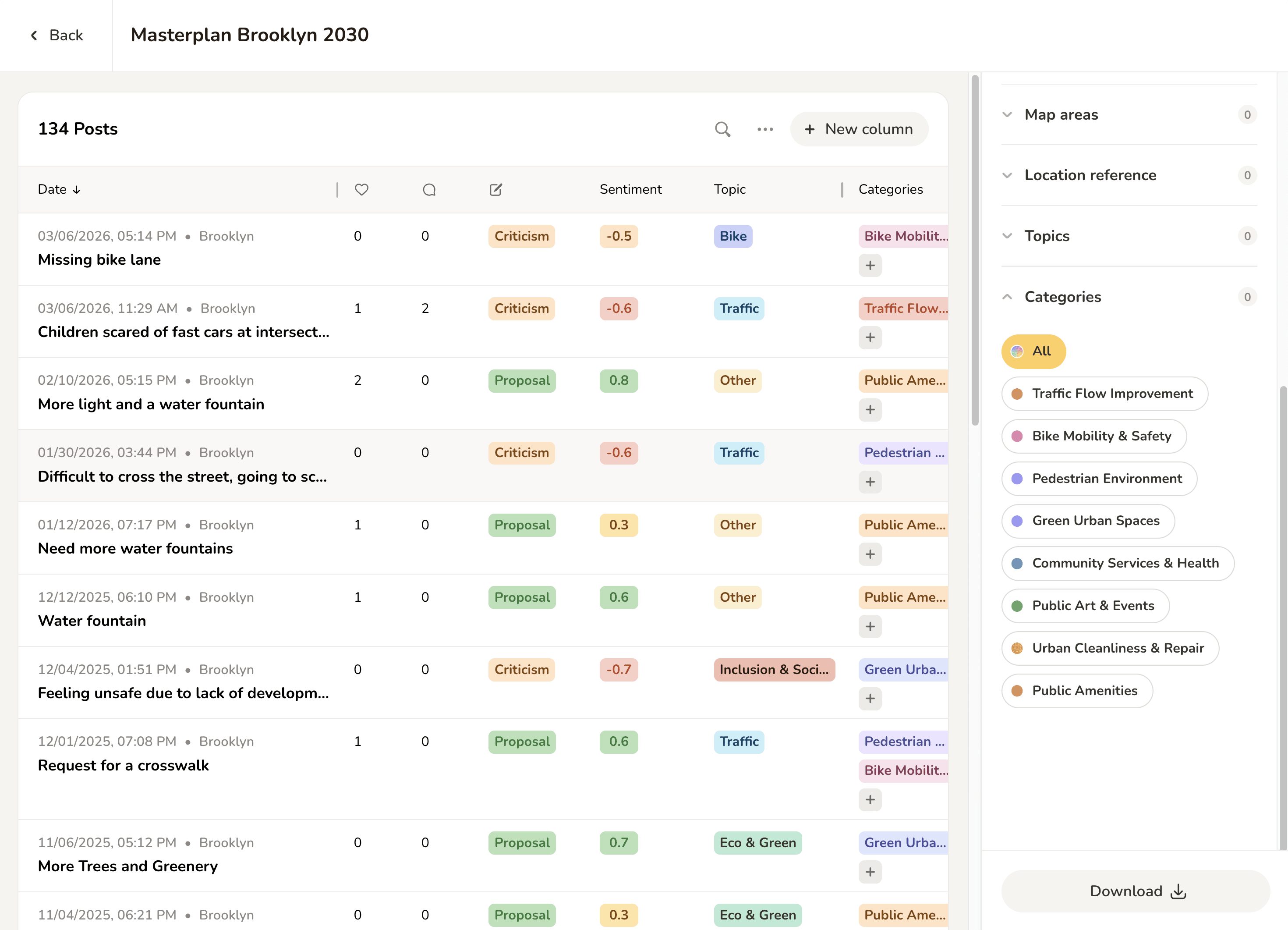
After the survey closes, Senf suggests a topic for every open-text answer, and your team renames or reassigns topics in bulk. A prompt someone used to paste into ChatGPT becomes the instruction on a column, filled in for every response. Answers written in other languages are translated back for your team, with the original one click away. Charts export as PNG, SVG or PDF for the client deck, and the full dataset exports to Excel. The guide to turning open-text comments into client-ready reports walks through it.
In the past we would bake in 80 hours of post-production to go through the survey information and make heads or tails of it. Now it's just done.
Brian Reetz
Principal at Design Collective
A project website on its own address
Residents look for the timeline, the events and the documents before they answer anything. Senf builds that as a multi-page project website on its own address, including a domain your client already owns, so the one-off Wix site and domain purchase drop out. The site and the survey translate into 17 languages.
A price you can put in the scope
Building a project from your RFP and using it in a proposal costs nothing. A project license starts at $2,500 once the project goes live, and an annual license for unlimited projects starts at $9,990, with unlimited users on both. The pricing page has the details.
Design Collective's landscape practice ran the Carroll Creek Park survey in Frederick, Maryland in Senf between February and April 2026, with map pins, drawn routes and image-preference questions across 35 questions.
- residents started the survey
- 2,201
- finished all 35 questions
- 1,436
- completion rate
- 65.2%
- average time to complete
- 10m 32s
Where Senf is not the right pick: customer research with panels and statistical testing belongs in SurveyMonkey. Senf's offline options are a printed survey whose scans come back into the project and a workshop mode for one tablet at the event table; it isn't a field-collection app. A city that wants citizens' assemblies or participatory budgeting votes on one permanent portal is better served by Go Vocal.
Social Pinpoint (now Social Point): standing engagement sites for agencies
Social Pinpoint is now part of Social Point from Open Point, which bundles it with Consultation Manager for stakeholder records. It is an established choice for municipalities and agencies that run one engagement site for years. A site administrator launches each project as a microsite with sub-pages, and residents drop pin comments on a Social Map. Its multilingual add-on machine-translates site content into up to 15 languages.
The fit for a consultancy depends on how many projects you run. Users come from a set license quota and are assigned project by project, lines and areas on the Social Map are layers the project team draws rather than resident answers, and the Analysis Assistant covers sentiment and key phrases, with theme detection sold separately as Advanced Reporting & Analytics. Contributions written in another language are not translated. Prices aren't published. Our Social Pinpoint vs. Senf comparison goes through each of these in detail.
Go Vocal: a broad platform for city-run engagement
Go Vocal, formerly CitizenLab, is based in Brussels and reported about 500 clients in 2024, among them Seattle, Dublin and Vienna. It covers a wide range of participation formats: surveys, polls, proposals, participatory budgeting, citizens' assemblies and document annotation. Map surveys take pins, lines and areas, the platform runs in 27 languages and meets WCAG 2.2 AA, and Premium adds FormSync for scanning paper forms. If your client is a city that already runs Go Vocal, building the project there keeps it on the city's platform.
For a firm running its own projects, the plans are organized around one organization. Standard includes 4 admin and 5 project manager seats, AI sensemaking covers up to 30 inputs before Premium, auto-translation of resident input starts on Premium with 3 languages, and the Esri ArcGIS integration comes with Enterprise or as a paid add-on. Go Vocal doesn't publish prices. The Go Vocal vs. Senf comparison covers the differences for consulting firms in detail.
What about Maptionnaire and PublicInput?
Maptionnaire is a map-survey tool with deep GIS options, including your own map services as basemaps, follow-up questions on every marking and an ArcGIS Online connection. Like Go Vocal, Social Pinpoint and PublicInput, it doesn't publish exact prices, so a project starts with a custom quote. For a firm working to a proposal deadline, that's the practical difference: Senf's prices are on its website, and the project is free to build before the contract.
PublicInput, based in Raleigh, North Carolina, is built for public agencies and says it works with more than 300 organizations in 37 states. Its strength is everything around the survey: more than 30 engagement formats, a resident database shared across projects, two-way email, SMS and social media, and tools that connect virtual public meetings on Zoom, Webex and Microsoft Teams. It also lists AI comment analysis and translation. The plans page names three tiers (Listen, Engage and Engage Plus) without listing prices.
For a consultancy, the deciding question is who owns the platform. If the client agency already runs PublicInput, build the project there.
How do you choose a tool for your next project?
Two questions settle most cases: does anyone need to answer on a map, and does the platform belong to your firm or to your client?
| If your project… | Use |
|---|---|
| is a short English-only survey that nobody answers with a location, such as client satisfaction or a staff poll | SurveyMonkey. It's quick to set up and free to start. |
| needs residents to mark points, draw routes or outline areas, and your GIS team wants the answers as map data | Senf. Map answers sync into ArcGIS Online as they arrive and export as GeoJSON or Shapefile. |
| mixes open houses, paper forms and an online survey that have to end up in one set of results | Senf. Scanned paper forms join the online responses, and each answer shows where it came from. |
| has to show the engagement approach in the proposal and price it into a fixed fee | Senf. Building the project is free, prices are published, and a project license from $2,500 starts when it goes live. |
| runs on a platform your client already pays for across departments | The client's platform, for example Social Pinpoint (now Social Point), Go Vocal or PublicInput. |
| tracks landowners and agencies alongside public input | Social Pinpoint, with Consultation Manager on the Open Point platform. |
How do you move a public project off SurveyMonkey?
There is nothing to cancel on day one. Keep SurveyMonkey for internal surveys and export the responses from past public projects, which paid plans allow, so they stay with the project records.
For the next project, upload the questionnaire as a Word document and Senf rebuilds its structure, or start from the RFP. Then replace each "which street?" dropdown and "describe the location" text box with a map question, so the answer arrives as a place. If the survey has to reach residents offline, print it for the open house. The paper survey guide covers that round trip. Firms comparing against ArcGIS can read Survey123 vs SurveyMonkey vs Google Forms.
Frequently asked questions
It depends on who runs the project. For planning, architecture and engineering consultancies running engagement on client projects, Senf combines map questions, a project website, AI analysis and client-ready charts, priced per project with unlimited users. For a public agency that wants one permanent engagement portal, PublicInput, Go Vocal and Social Pinpoint (now Social Point) are the established options. For GIS-heavy map surveys, Maptionnaire is another option.
Keep SurveyMonkey for the surveys it does well.
Compare directly on your next project
Send the RFP you're pursuing and we'll build the engagement project from it, map questions and project website included, so your team compares on its own project.
Free to build and use in a proposal.
Pascal Fuhr, CEO
Senf is the community engagement platform built for private-sector planning, architecture and engineering consultancies.
Sources
Vendor pages checked on October 18, 2026.
- SurveyMonkey
- Social Point
- Go Vocal
- Maptionnaire