A charrette is an intensive, collaborative workshop in which planners, designers, stakeholders, and community members work together over a short, concentrated period to produce a design or plan. The format is built around rapid cycles of drawing, feedback, and revision so that competing interests are reconciled into a shared vision quickly.
Where the charrette comes from
The word comes from the French for "cart." At the École des Beaux-Arts in Paris, a cart was wheeled around to collect students' drawings at the deadline, and they would keep working as it approached — "en charrette." Today the term describes any deadline-driven, hands-on design session.
How charrettes are used in planning
Charrettes are common in master planning, urban design, and corridor or neighborhood studies. They compress what might otherwise be months of back-and-forth into days, producing buy-in because participants see their input reflected in the design in real time.
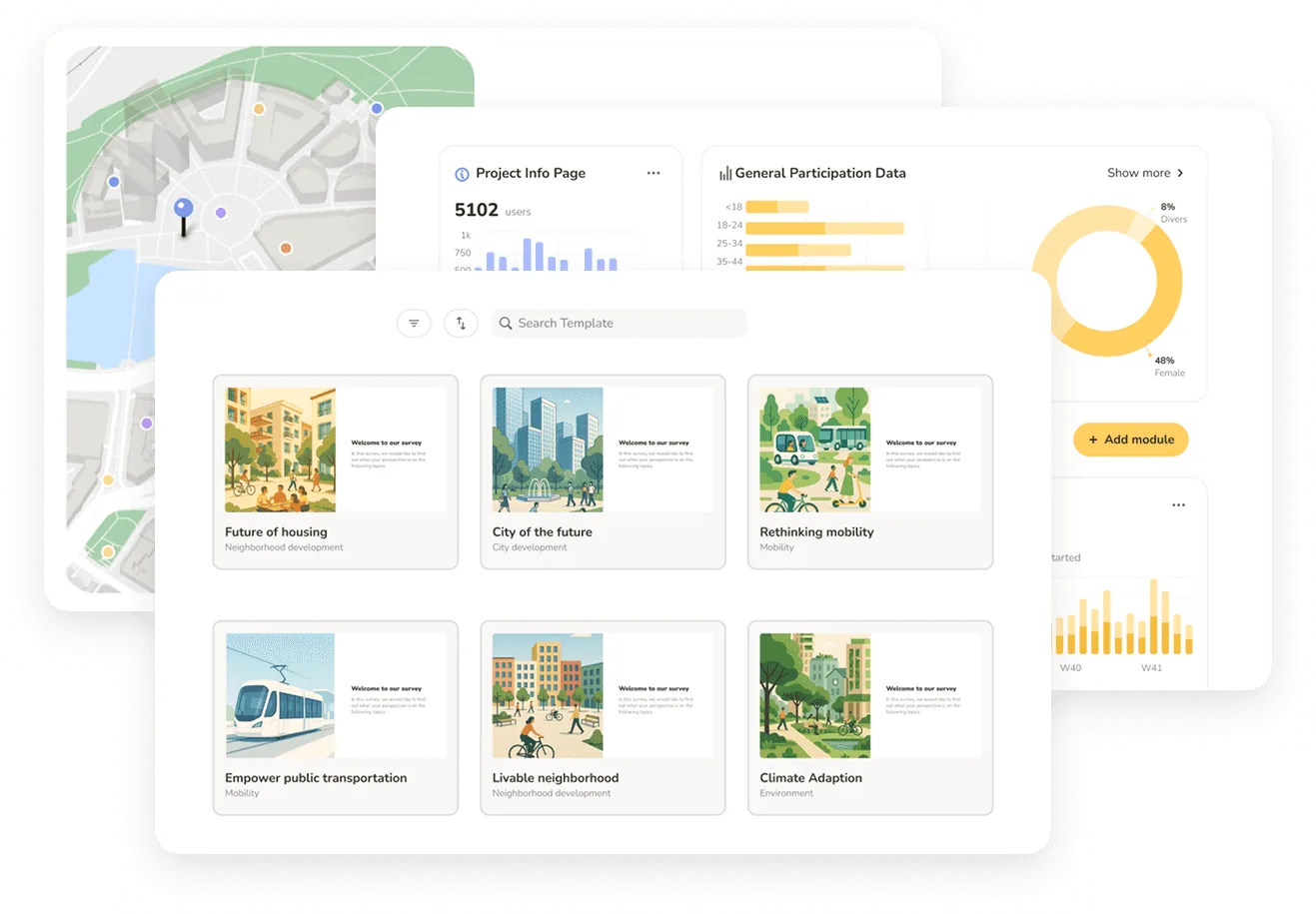
The challenge is capturing and synthesizing the volume of input a charrette generates. Map-based digital tools increasingly complement in-person charrettes by letting residents who could not attend contribute spatial input that feeds the same record.