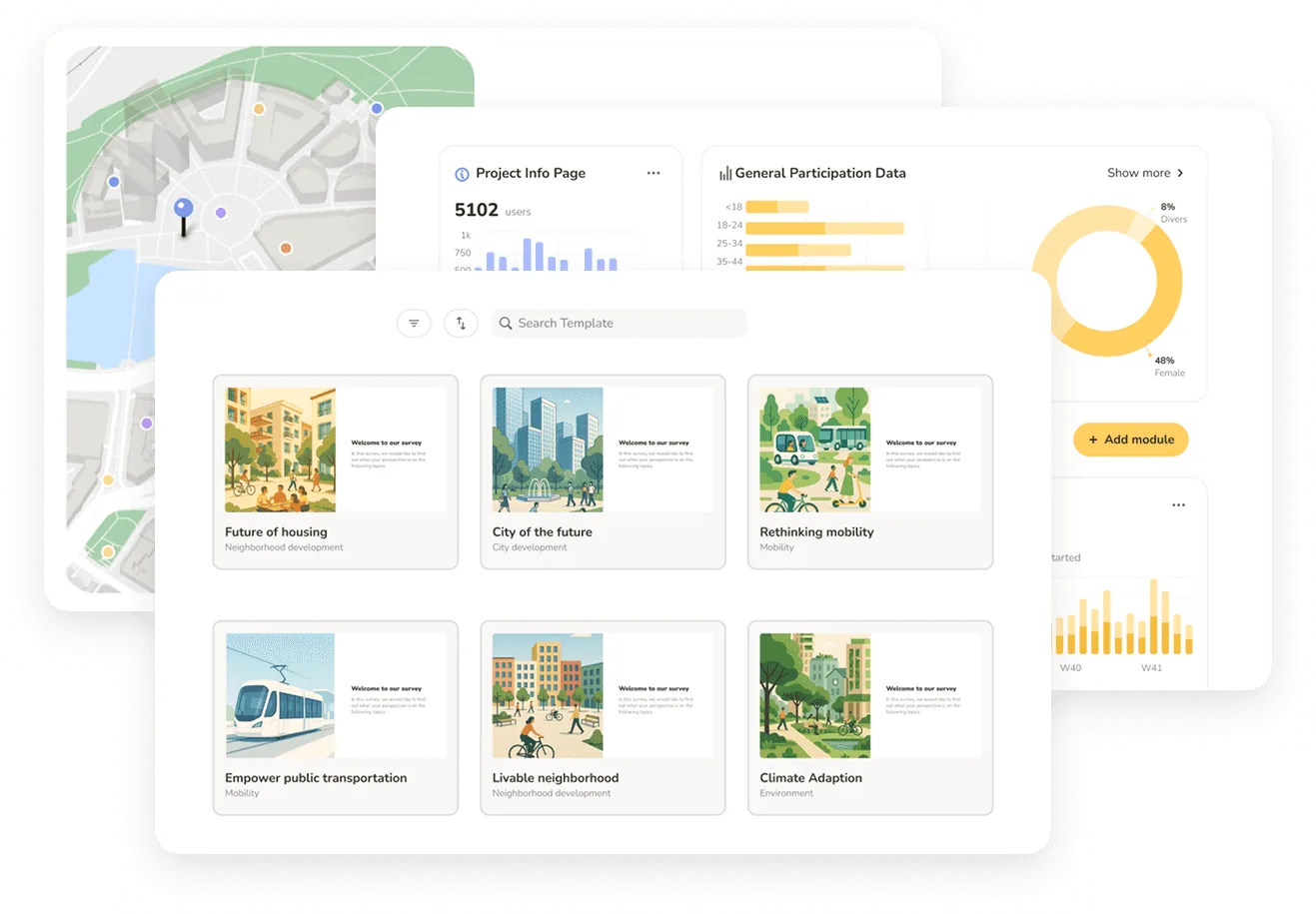
Public participation is the practice of involving people in the decisions that affect their lives — in planning, it means giving residents and stakeholders a genuine role in shaping projects, plans, and policy rather than simply notifying them after the fact. It is the core principle behind community engagement and is often structured along a spectrum from informing to empowering.
Public participation vs. community engagement
The terms are often used interchangeably. "Public participation" emphasizes the public's right and role in decision-making, while "community engagement" emphasizes the relationship-building work that makes participation real. In practice, both describe the same goal: decisions informed by the people they affect.
Levels of public participation
The most widely used framework is the IAP2 Spectrum of Public Participation, which arranges engagement into five increasing levels of public influence: inform, consult, involve, collaborate, and empower. Choosing the right level for each project — and being honest with the public about it — is a foundation of credible engagement.