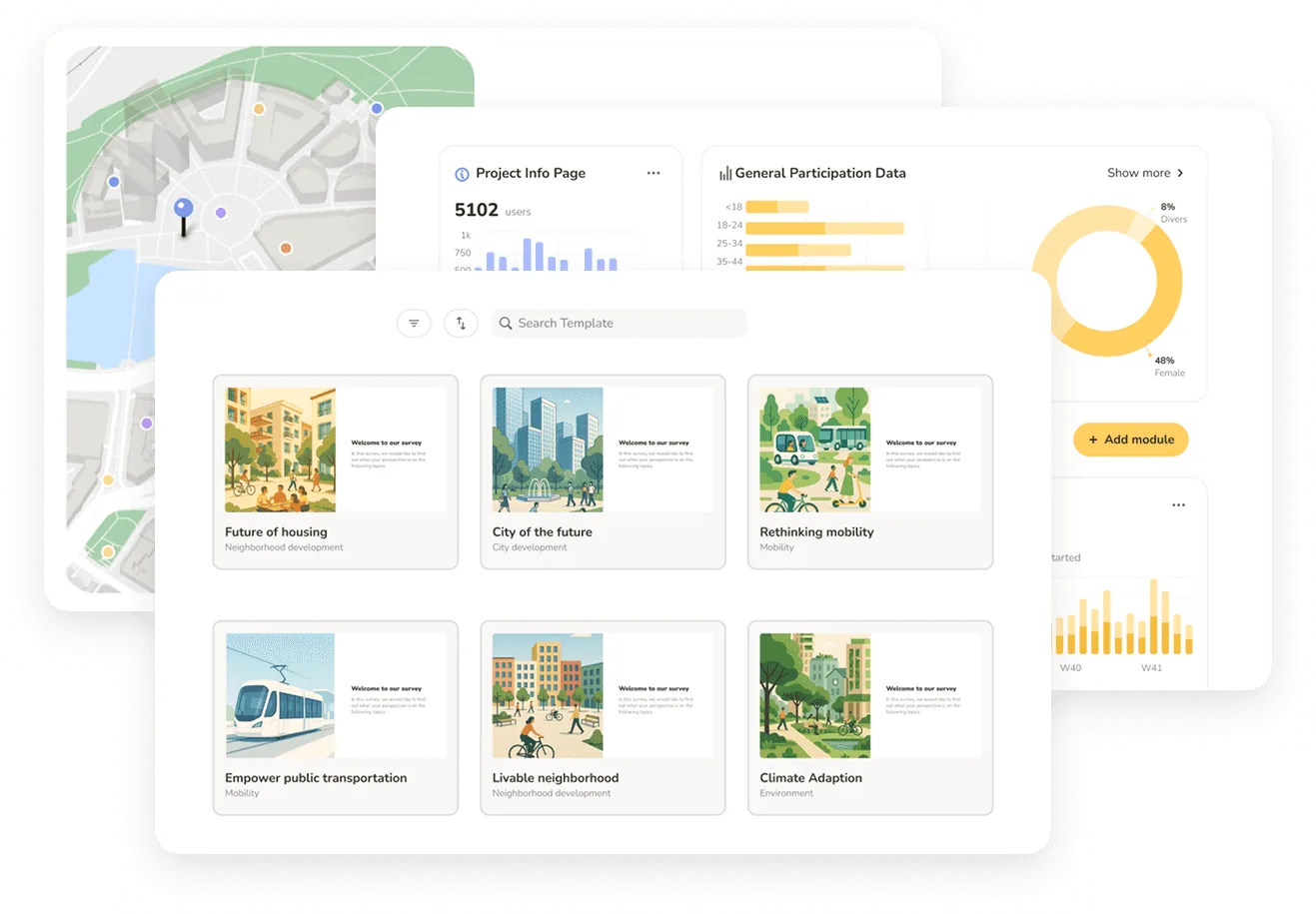
Community engagement is the process by which planning, design, and engineering teams involve the public in decisions that affect their neighborhoods — gathering local knowledge, surfacing concerns, and building support before a plan or project is finalized. In planning practice it spans everything from informing residents to actively collaborating with them on outcomes.
Why community engagement matters in planning
Public projects almost always carry a participation requirement, and the quality of that engagement increasingly shapes whether a project is approved, delayed, or denied. Decision-makers want evidence that the people actually affected were heard and that their input changed something — not that a notice box was checked.
Beyond compliance, good engagement reduces risk. Organized opposition is one of the most common reasons a sound project stalls, and a credible, well-documented engagement effort removes the easiest argument against a project: that the community was never genuinely consulted.
What effective engagement looks like
Strong engagement reaches beyond the people who show up to evening meetings, captures input in a structured way, and shows a clear line from what the community raised to what changed in the proposal. Digital, map-based participation lets residents weigh in on their own time and tends to surface the quieter middle of a neighborhood rather than only the organized poles.